
Bardamu’s Flight from War
Journey to the End of the NightThis flow traces Ferdinand Bardamu’s passage from naïve enlistment through battlefield terror toward a lifelong practice of evasion.
increasing Bearing strength in each event
 decreasing
Bearing strength in each eventdecreasingThe Café Argument
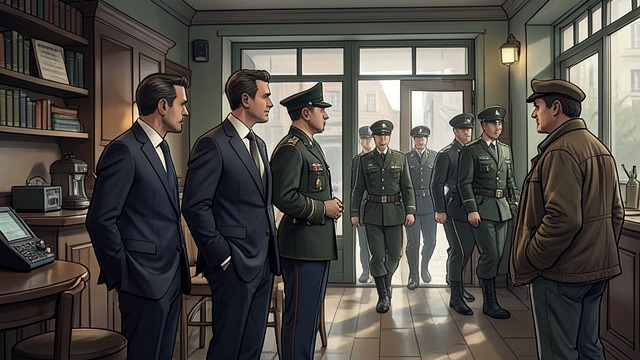
The Café Argument
A careless beginning
Ferdinand Bardamu meets Arthur Ganate at a café and mocks patriotic claims about a pure French race. Their argument makes war seem at once absurd and theatrically exciting.
The decisive impulse
When a regiment passes, Bardamu impulsively falls in behind it. A moment of talk becomes an enlistment that will define his first escape attempt.
First Battlefield Terror
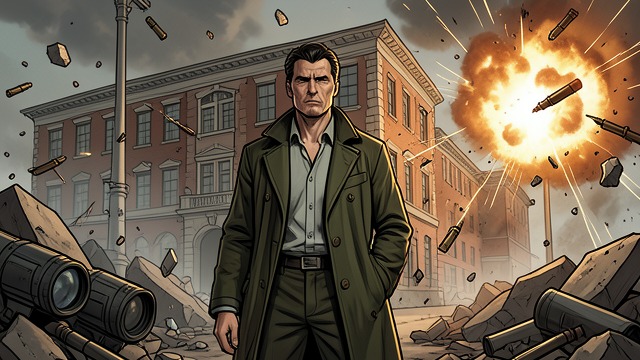
First Battlefield Terror
The road under fire
Bardamu watches the colonel calmly expose himself to German bullets and realizes that the war is not a misunderstanding. His imagination makes the danger more vivid than patriotic abstractions can contain.
A shell’s lesson
A shell kills the colonel and messenger. Bardamu feels relief, not honor, and learns that survival—not glory—will govern his choices.
The Search for Capture
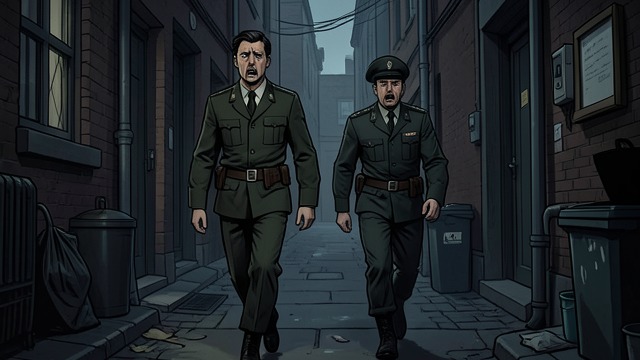
The Search for Capture
A practical hope
Assigned dangerous night errands by Major Pinçon, Bardamu learns that military routine can be as threatening as enemy fire. He begins to dream of surrender as an escape from both armies.
Robinson’s example
He meets Léon Robinson, another soldier seeking capture, and shares a brief companionship shaped by mutual fear. Their attempted approach to enemy-held ground fails to deliver a safe exit.
A Panic in Paris
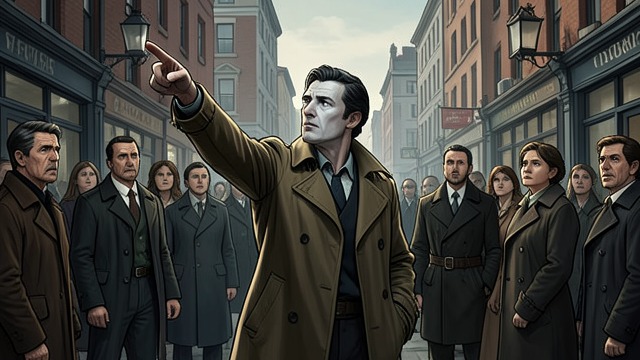
A Panic in Paris
The civilian theater
Back in Paris, Bardamu finds civilians converting war into ceremony, medals, and patriotic talk. Lola’s enthusiasm exposes how differently the sheltered and wounded understand danger.
Terror breaks through
At Duval’s restaurant, he imagines bullets striking everyone and warns the crowd. Military authorities take him away, and his panic becomes an institutional problem rather than a political argument.
The War’s Afterlife
The War’s Afterlife
Fear made permanent
Bardamu’s war experience leaves him unable to trust public bravery or official assurances. The memory of mass violence follows him into work, relationships, and medical practice.
No clean discharge
Leaving the army saves his body but not his sense of safety. His later wandering remains an extension of the first attempt to get out of the war’s reach.
At the story’s opening, before mobilization
During the opening weeks of the war
After the first retreat, during autumn campaigning
During convalescence in Paris, after Bardamu’s wound
During later reflection, after Bardamu has returned to civilian life
